Five Essential Requirements of an Effective Supervisor
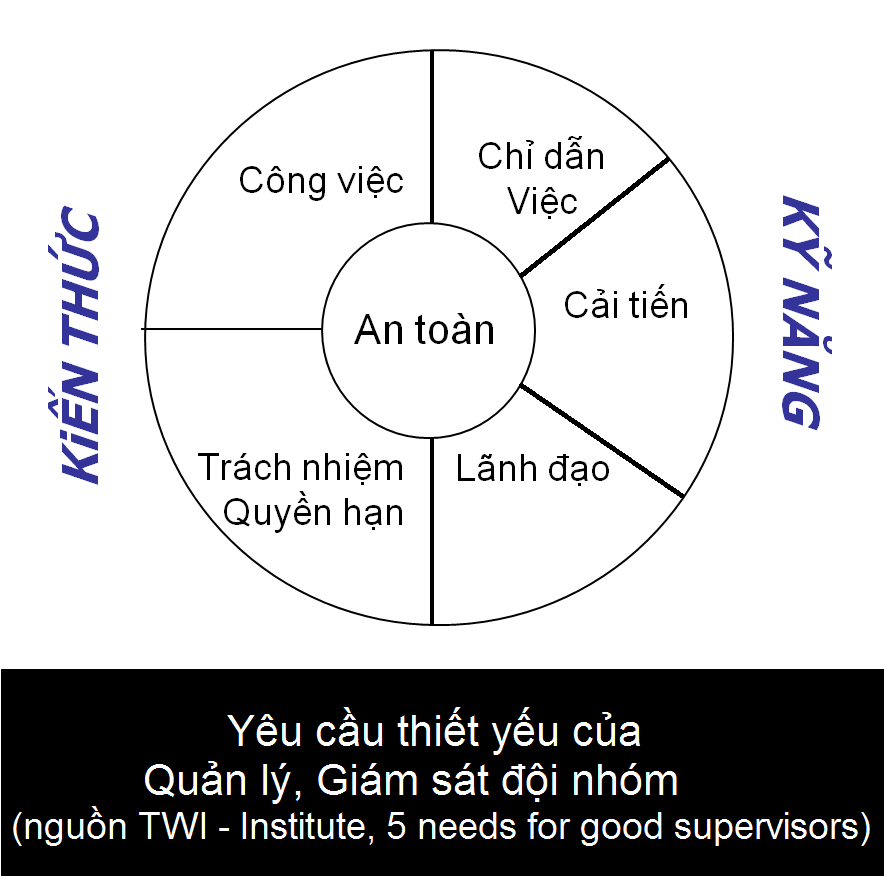
An effective frontline supervisor is expected to demonstrate five core capabilities:
- Job Knowledge
- Knowledge of Responsibilities and Authority
- Job Instruction Skills
- Improvement Skills
- Leadership Skills
1. Job Knowledge
This refers to technical and professional knowledge related to the specific industry, including products, equipment, processes, and technologies.
Such knowledge must be continuously developed and updated in line with operational requirements and industry practices.
It enables supervisors to:
- Distinguish between normal and abnormal conditions
- Diagnose issues accurately
- Make informed decisions in real-time
2. Knowledge of Responsibilities and Authority
This includes a clear understanding of the roles, responsibilities, and authority associated with the supervisory position.
It typically covers:
- Policies, regulations, and internal rules
- Organizational structures and cross-functional relationships
- Performance targets and work schedules
These elements vary across organizations. Therefore, supervisors must fully understand their scope of responsibility and authority to perform effectively within their role.
3. Job Instruction Skills
Job Instruction enables supervisors to develop a capable and competent workforce through a structured, consistent, and effective training approach.
Strong instruction capability helps to:
- Reduce errors, rework, and waste
- Improve safety and reduce accidents
- Prevent damage to tools and equipment
- Lower operational costs
Regardless of how technically skilled a supervisor may be, without the ability to teach others, knowledge and capability cannot be scaled.
This capability is developed through TWI – Job Instruction (JI).
4. Improvement Skills
Improvement skills focus on optimizing the use of materials, equipment, and human resources.
This is achieved by systematically analyzing work processes and identifying opportunities to:
- Eliminate unnecessary steps
- Combine tasks
- Rearrange workflows
- Simplify operations
The result is higher productivity and improved quality using existing resources.
This capability is developed through TWI – Job Methods (JM).
5. Leadership Skills
Leadership skills enable supervisors to effectively work with and lead people to achieve results.
This includes applying fundamental principles to:
- Build positive workplace relationships
- Prevent people-related issues
- Identify early signs of problems (e.g., changes in output, behavior, or team dynamics)
- Resolve issues using structured approaches
When challenges arise, supervisors must be equipped with practical methods to address them while maintaining both performance outcomes and healthy relationships.
This capability is developed through TWI – Job Relations (JR).
Knowledge vs. Skills
- Knowledge is what you acquire through learning – reading, training, and observation.
- Skills are the ability to perform tasks effectively and correctly.
Skills can only be developed through practice and application.
For example, one cannot learn to swim by reading a book alone.
Supervisors are not born with these capabilities – they must be systematically trained, practiced, and refined through real-world experience.
(See also: TWI – Skills Development)